• If you are a writer, you have come across, or even looked for, writing advice. You may have even given out some advice. What doesn’t get talked about is how to evaluate writing advice.

    I think there are a couple of rules for hearing and accepting writing advice.

    First, all writing advice (including this post) is crap. And all writing advice is useful.

    Second, the usefulness of any advice depends on two things: 1) how well you know yourself, and 2) how good you can apply that advice your particular situation. 3) Don’t get upset about writing advice that doesn’t work for you.

    The second point is the most important point, other than the first point. Spending time to understand how you work, how you organization, how you get stuff done, is always worth it.

    You will hear a lot of advice and the faster you can decide if it will be useful for you, the faster you can make decisions and move forward (or not) with a particular piece of advice.

    That’s all the advice I’m going to give you for now.

  • Anytime the phrase “am I having a stroke?” runs through your head, it isn’t a good thing. Last week, we were out with a few of the kids for a birthday. We were at a restaurant with a nice outdoor patio and the sun was shining.

    I had a visual headache, but it wasn’t too bad. I get them once and a while so I didn’t think too much about it. I was talking with my son and daughter, debating the finer points of Mac & Cheese (all three of us are big fans, but one of them–cough-my son-cough thinks that adding tuna is acceptable and were yet again attempting to point out the flaws in his reasoning) and I started to have problems.

    I was facing my son and my words got messed up. I think much of it and tried again to make my point. I failed even worse. The words coming out of my mouth did not match what I was trying to say. Worse, I’m not sure I could have said what I was trying to say. As I kept trying to say what I intended, I could see him get more concerned with my gibberish. I remember my daughter asking loudly, “Dad, are you ok?” That got my wife’s attention from the other end of the table.

    She’s a nurse so we don’t mess around with thing and soon we were on our way to the ER. When you walk into an ER and mention “Stroke”, they hop right to it. CT, MRI, a ton of physical “follow my pen” and “touch you elbow” tests and the obligatory blood tests followed quickly.

    At the end of it all, they told me that there was no signs at all of a stroke or anything else major. They did mention a migraine and I’ve been reading up on them. I have a neurologist appointment tomorrow. Not sure what I will find out. Not sure what I want to find out.

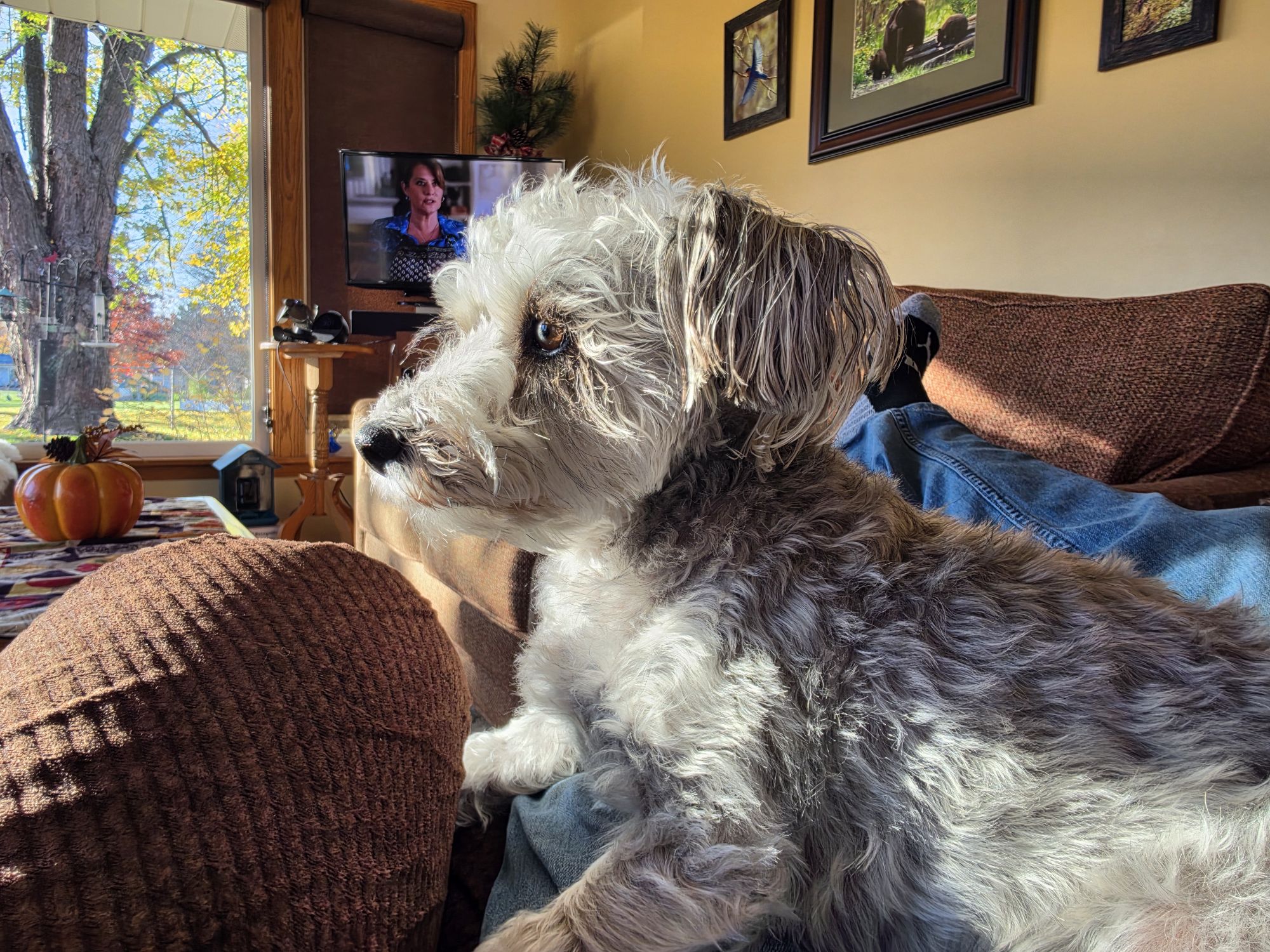
  • Its starting to get chillier here in Minnesota. But we get good sun into our (appropriately named) sunroom and it feels nice.

  • When I was growing up, one of my favorite books was Mike Mulligan & His Steam Shovel. It follows the career of a steam shovel (Mary Anne) and her driver (Mike). I read it to my kids and grandkids. It was written by Virginia Lee Burton. She also wrote The Little House, another favorite.

    Here are a few bits embedded in the story that stuck with me.

    Mechanical work is cool. The story lifts up modern creations such as train tunnels, canals, highways, skyscrapers, and airports.

    Clever solutions save the day. They get stuck at the end and figure out a solution.

    Precision matters. “They finished the first corner neat and square.” Being able to work hard is important.

    Maintenance is important. Mary Anne was still in good shape after years of working.

    It acknowledges that technology moves forward and most things become obsolete. It doesn’t pull any punches about steam shovels becoming obsolete. Mike and Mary Anne had to work harder to finish the job.

    Pretty good for a book published in 1939.

The Flannel

Latest Posts

Archives

Where to find me

Contact Me

Privacy Policy


John Bredesen

Copyright 2026 ©